
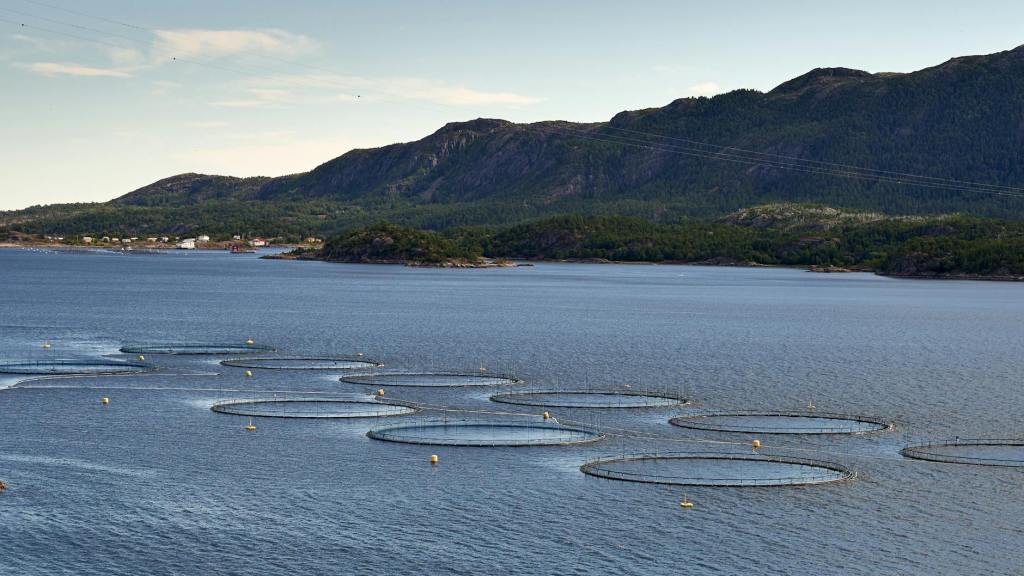
Book 2 in the Tide Harbor Suspense series, Lost Beneath the Tide, focuses on fish farming, also called aquaculture, in Nova Scotia. Currently the provinces aquaculture industry produces ninety million dollars in production and exports to eighty countries.
Farming salmon involves several stages. First salmon eggs are fertilized and the fry allow to grow in fresh water for a year to a year and a half. The smolt are transferred to the outdoor pens. They spend up to two years in the saltwater fish pens. This is the cheapest and most natural way to raise the fish.
The salmon fish pens in the Minas Basin area of the story are round with two layers of netting suspended from the floating sides to form a strainer-like shape. The inner net keeps the fish in. The outer net keeps the predators out.
The pens are tended by a variety of boats that ferry food, medicine, and people to the nets. These are usually twenty to thirty feet in length.

Problems with Salmon Farming
While salmon are one of the easiest fish to raise in pens, the practice has numerous problems.
- Nets can be damaged in heavy weather. The salmon can escape and compete with wild salmon.
- Escapees often interbreed with wild stocks destroying the wild species. This is especially true if genetically-modified salmon are being raised.
- Kept in tight confinement, the pen-raised fish are susceptible to diseases and sea lice. Operators use chemicals to treat the fish, adding toxins to inshore water.
- The original concept of the outdoor pens was that the sea currents would wash away the excrement and food waste. But because they are crowded together, too much waste is produced. This builds up beneath the pens and pollutes the inshore waters. The waste can also suffocate the sea life living around the pens.
Solving These Problems
There is no doubt that wild salmon and other sea life are becoming rarer as the oceans warm and acidify due to climate change. If we want to eat fish, eventually most seafood will be “farmed.”
Raising salmon on land in recirculating pens is probably one of the best solutions. Sustainable Blue is a company doing this in Nova Scotia.
Getting change to happen in the fish farm industry will take a concerted effort. Caterina Silva’s research, the heroine in Lost Beneath the Tide, is intended to do just that.
Watch this video, to see an actual salmon farm .
 Tide Harbor Suspense by Zara West