

The term story bible (also known as a show bible, a universe bible, a series bible, or simply “bible”) comes from the television industry, although they are also used in movie and video game production.
It is quite common in TV series to have multiple or sequential screen writers. The story bible is a collection of details and data that make sure every writer has the same information available from past episodes in an organized format.
The information recorded keeps everyone on track and makes sure there are no inconsistencies. A new writer to a series will usually be given the story bible to use in writing their script.
Trivia Fact: TV series often have a person on staff who knows many of the details relating to the show. They are sometimes called a “walking bible.”
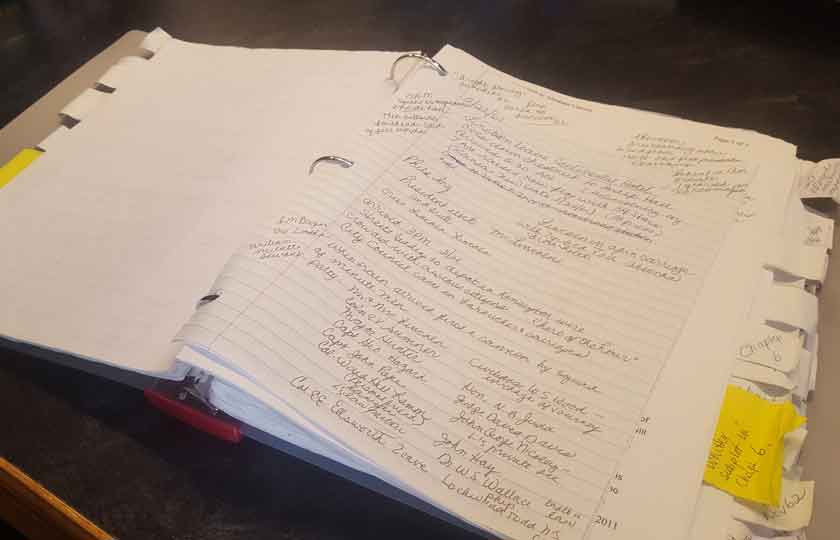
But I’m a novelist? Why do I need one?
A novel or a novel series can be just as detailed and complex as a TV series, so it makes sense for writers, like me, to take a tip from our screenwriting buddies and to invest in making our own story bibles.
Here are what two authors say:
“A series ‘bible’, for those not familiar with the term, is a reference document that contains everything about a series (book or TV) except for the actual text/content. Think of it as meta-content.” Karen Myers
“Something that all writers (should) do is to keep a “bible” for your book/series (even more important in the case of a series) in order to keep up with all the trivial—and not-so-trivial—details going on.” Kaye Dacus
I personally believe that every story and novel should have a story bible. Unless a story is flash fiction, there will surely be character and setting details as well as cultural mores and behaviors.
Every single novel is full of specific facts and details that must remain consistent over the length of the story. And you never know. Maybe that stand alone will spawn a series. That’s what happened to me with my first romantic suspense Beneath the Skin.
 Tide Harbor Suspense by Zara West